

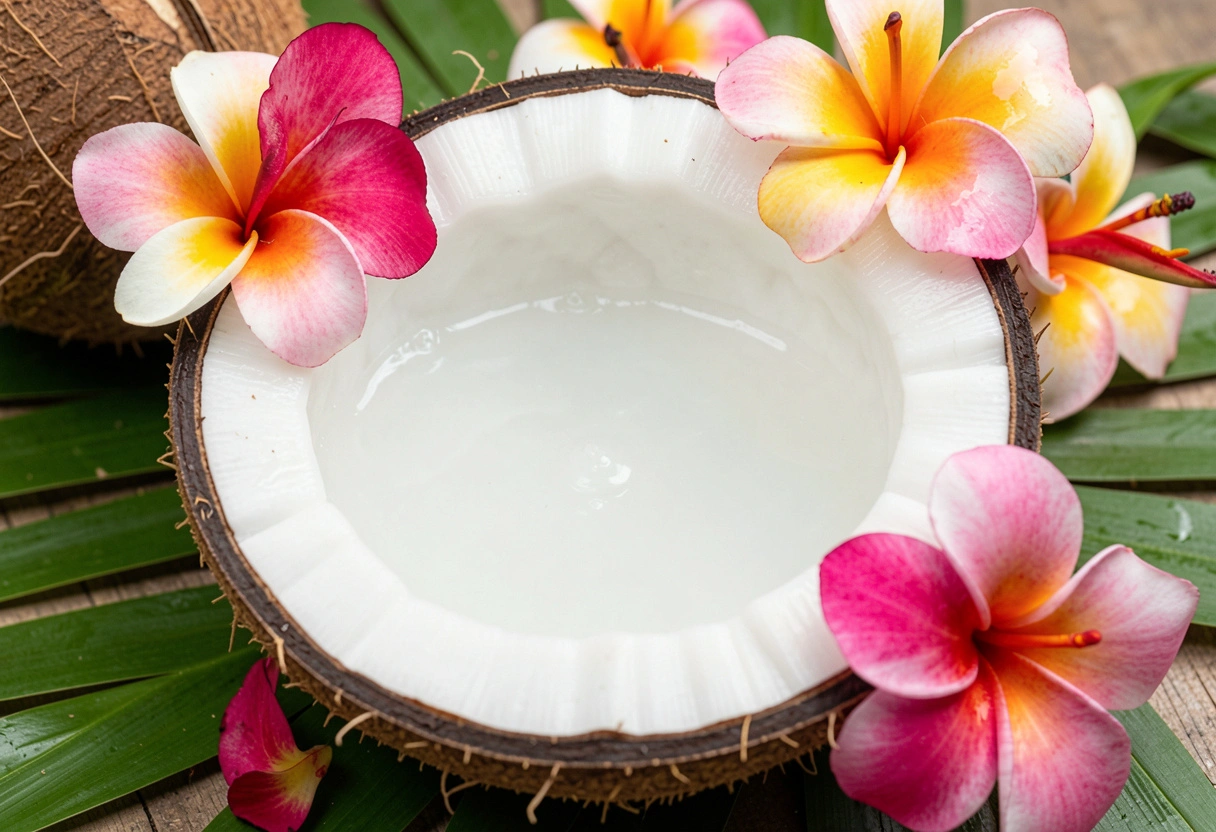
 If you’ve ever cracked open a coconut and found soft, jelly-like flesh instead of the firm white meat you expected, you’ve experienced raw young coconut. It’s not a different variety of coconut, it’s simply a coconut harvested earlier, before the flesh has hardened and the water has thickened into oil-rich milk. For many people, this earlier stage is exactly what they’re after, and once you know what to look for, it’s easy to see why.
What Makes a Coconut “Young”
A coconut goes through several stages of maturity while still on the tree. Young coconut is typically harvested between 6 to 9 months, well before the 11 to 12 months it takes to fully mature. At this stage, the outer husk is usually green (though it’s often trimmed white for sale), the water inside is abundant and mildly sweet, and the flesh lining the shell is thin, soft, and almost translucent.
Compare that to a mature coconut, and the difference is obvious. Mature coconuts have thick, firm white meat, less water, and a heavier shell, useful for grating, cooking, or pressing into oil. Young coconuts, by contrast, are prized for their liquid and their delicate, spoonable flesh, two things that change quite noticeably as the fruit continues to ripen on the tree.
How Young Coconut Differs From Mature Coconut
Beyond texture, the two stages are genuinely different in what they offer. Young coconut water tends to be more abundant and lighter in taste, while mature coconuts contain comparatively little water but far more oil-rich flesh, ideal for pressing into coconut milk or oil. The flesh itself tells a similar story: young coconut meat is soft enough to eat with a spoon straight from the shell, while mature coconut meat needs to be grated, blended, or cooked to be used in most recipes.
Neither stage is “better” than the other, they simply serve different purposes. If you’re after something to drink and eat fresh with minimal effort, young coconut is the better fit. If you’re cooking, baking, or making coconut milk from scratch, mature coconut is usually what a recipe calls for.
Why People Choose It Raw
Eating coconut raw, rather than processed into milk, oil, or desiccated flakes, means getting the fruit exactly as nature intended, unheated and unaltered. Raw young coconut water is often described as refreshing and lightly sweet, a natural option many reach for after exercise or on a hot day. The soft flesh, sometimes called coconut “meat” or “jelly,” has a mild flavour and a texture almost like a light custard, easy to scoop straight out of the shell with a spoon.
Because nothing about it has been cooked or processed, raw young coconut retains its natural composition exactly as harvested, which is part of why it’s become popular among people who prefer eating fruit close to its natural state, without any additional steps between the tree and the table.
How to Actually Eat One
For anyone new to it, opening and eating a raw young coconut can feel a little intimidating, but it’s simpler than it looks.
- Drink the water first. Most vendors or suppliers will cut an opening at the top for you, or you can do this yourself with a sturdy knife and some care. A straw makes it easy to drink straight from the shell.
- Scoop out the flesh. Once the water is finished, cut or crack the coconut open further to access the soft, jelly-like meat lining the inside. A spoon is usually all you need, it separates from the shell easily at this stage of ripeness.
- Eat it as is, or add it to something else. Some people enjoy the flesh on its own, while others stir it into smoothies, desserts, or fruit bowls for texture and a subtle natural sweetness.
There’s no strict “right way” to eat it, part of the appeal is how simple and unfussy the whole experience is, whether you’re having it as a quick snack or turning it into something more elaborate.
What to Look For When Buying
Freshness matters more with young coconut than almost any other fruit, since both the water and flesh are at their best shortly after harvest. A good coconut should feel heavy for its size (a sign it’s full of water), and if it’s already trimmed and white, the surface should look clean without soft spots or discolouration.
If you’re buying whole, unopened coconuts, a supplier who moves stock quickly and sources directly from farms will generally give you a fresher product than one sitting on a shelf for an extended period. It’s also worth asking how recently the coconuts were harvested, since young coconut doesn’t keep the same way mature coconut does, freshness has a shorter window here, and it’s part of what makes the experience worthwhile.
Bringing It Back to Something Simple
At the end of the day, raw young coconut is exactly what it sounds like: a fruit enjoyed at its freshest, before processing changes its texture or flavour. Whether you’re drinking it straight from the shell or scooping out the soft flesh with a spoon, there’s very little standing between the fruit and how it reaches you.
If you’re looking to try it for yourself, working with a young coconut supplier who sources fresh, quality fruit makes a real difference in how it tastes. T&L Coconut delivers fresh young coconuts sourced directly from local farms, so you’re getting the fruit close to how it left the tree.
