

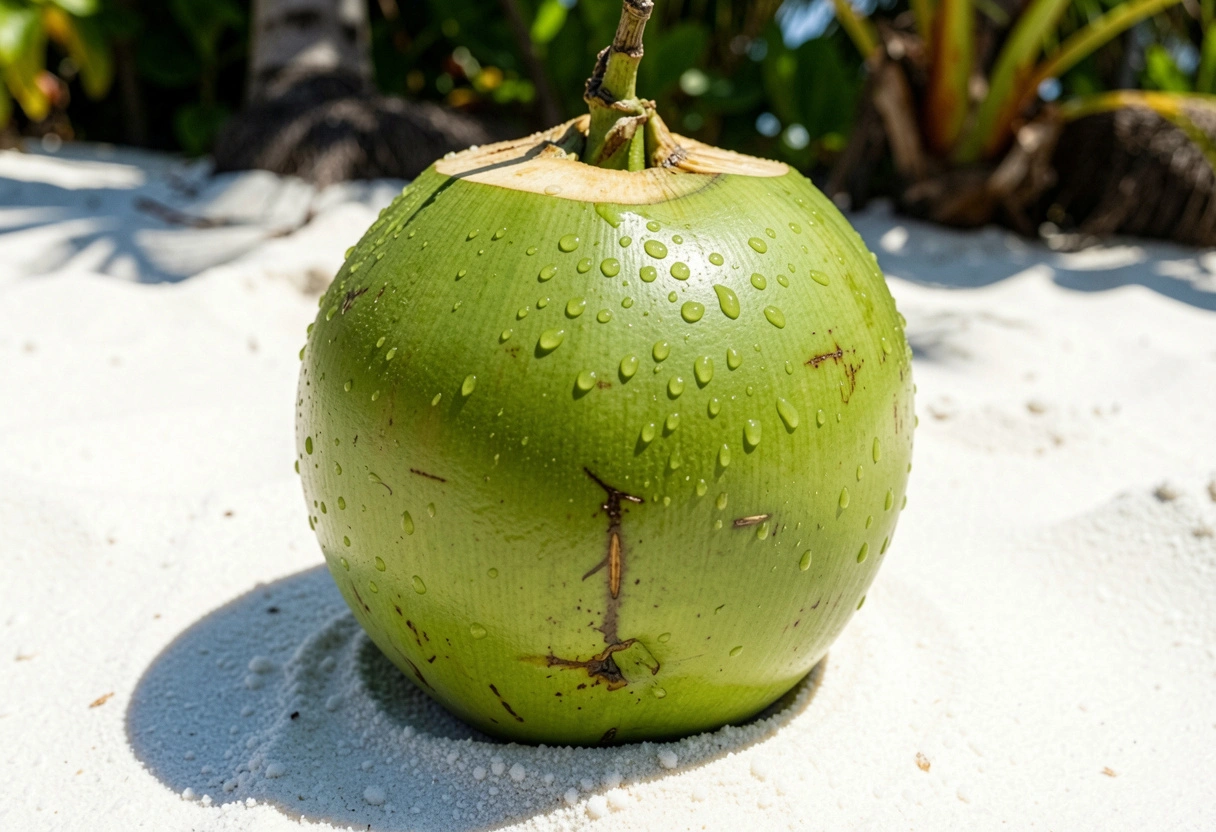
Not every coconut on the shelf is as fresh as it looks. A fresh green coconut should be full of sweet, clear water and soft, delicate flesh, but pick the wrong one and you might end up with something watery, sour, or barely worth opening. Knowing what to look for makes all the difference, and once you know the signs, it becomes second nature, no different from learning to pick a ripe pineapple or a good avocado.
Why Freshness Matters So Much With Green Coconut
Unlike fruits that ripen further after being picked, coconut water and flesh start changing the moment the coconut is harvested. The water can lose its natural sweetness, and the thin, jelly-like flesh can start to firm up or develop an off taste the longer it sits. This is part of why a fresh green coconut tastes noticeably different from one that’s been sitting around for a while, even if both look similar from the outside.
Because these changes aren’t always visible at first glance, learning to spot the right cues before you cut one open (or before you buy) saves you from disappointment later, especially if you’re buying in bulk for an event or for regular use.
What a Genuinely Fresh Coconut Looks and Feels Like
Check the Weight
- A fresh green coconut should feel noticeably heavy for its size. That weight comes from the water inside, and a lighter-than-expected coconut usually means less water, or water that’s started to evaporate or ferment. If you’re comparing two coconuts of a similar size, the heavier one is almost always the better choice.
Look at the Husk
- If the coconut is sold with its husk intact, it should still look green or lightly tan, without large brown or black patches. Trimmed, white coconuts (commonly sold at markets and supermarkets) should have a clean, slightly moist surface rather than a dry, cracked, or discoloured one. A husk that looks freshly cut, rather than one that’s been exposed to air for days, is generally a good sign.
Give It a Shake
- Gently shaking a coconut close to your ear can tell you a lot. You should hear the water sloshing clearly inside. If there’s very little sound, or the sound seems dull and muffled, the coconut may be older or drying out. This is one of the quickest checks you can do while standing at a market stall, and it becomes easier to judge the more coconuts you handle.
Smell Before You Buy, If You Can
- A fresh coconut generally has little to no smell from the outside. A sour or fermented odour, especially near the stem or any cracks, is usually a clear sign it’s past its best. Trust this instinct, if something smells off, it usually is.
Signs to Avoid
A few red flags are worth watching for when choosing between coconuts:
- Soft or mushy spots on the shell or husk, which often indicate spoilage underneath
- Visible mould, usually appearing as dark or fuzzy patches near cracks or the stem
- A husk that’s dried out and shrunken, suggesting the coconut has been sitting for longer than ideal
- Cracks or punctures, which can let air in and speed up spoilage
If a coconut shows more than one of these signs, it’s best to pass on it rather than risk it, especially since there’s no reliable way to check the water or flesh quality without opening it first.
Where You Buy Matters Too
Even with all the right knowledge, how a coconut has been stored and how quickly it moved from farm to shelf plays a big role in its freshness. Coconuts that pass through fewer hands, ideally straight from farm to supplier to you, tend to stay fresher for longer than ones that sit in storage or change hands multiple times. Asking a supplier how recently their stock was harvested is a fair question, and a good supplier should be able to answer it without hesitation.
How to Store It Once You Get It Home
Even a genuinely fresh coconut won’t stay at its best forever, so storage matters too. If you’re not opening it right away, keeping it in a cool, shaded spot, or in the refrigerator if you have space, helps slow down the natural changes that happen after harvest. Once opened, coconut water is best consumed within a day or two, and the flesh should be kept chilled and eaten fairly soon after scooping it out, since both lose their freshness quickly once exposed to air.
Bringing It All Together
Choosing a truly fresh green coconut comes down to a few simple checks: weight, husk condition, sound, and smell. None of these take more than a few seconds once you know what you’re looking for, and together they make it far easier to avoid a disappointing coconut and get one that’s genuinely worth opening.
If you’d rather skip the guesswork altogether, working with a supplier who sources and delivers fresh stock consistently takes the uncertainty out of it. T&L Coconut sources fresh green coconuts directly from local farms, so freshness is built into the process before it ever reaches you.
